Dental Bridges in Mareeba
Addressing the Gap Left by a Missing Tooth
A missing tooth can affect more than appearance — over time, the surrounding teeth may begin to shift, bite alignment can change and everyday functions like eating and speaking can become more difficult. At Mareeba Dental Centre, we assess patients with missing teeth to determine whether a dental bridge is an appropriate treatment option for their situation. A bridge works by anchoring an artificial tooth to the healthy teeth on either side of the gap, restoring the look and function of the area without the need for a surgical procedure.
Not every patient with a missing tooth will be a suitable candidate for a bridge, and we take the time to explain all available options before any treatment is planned. If a bridge is determined to be appropriate, we work with each patient to ensure the restoration fits comfortably and blends naturally with the surrounding teeth. To find out whether a dental bridge may be suitable for you, call our team on (07) 4092 4277.
Send Us a Message
Thank you for contacting Mareeba Dental Centre.
We will get back to you as soon as possible.
Oops, there was an error sending your message.
Please try again later.
Frequently Asked Questions
Will a dental bridge affect the way I eat and speak?
A missing tooth can already impact chewing function and speech, and a dental bridge is designed to restore both. Most patients find that once the bridge is correctly fitted and the bite has been adjusted, eating and speaking feel more natural than before. There is typically a short adjustment period while the mouth adapts to the restoration, during which softer foods may be more comfortable. If any difficulty persists beyond the initial settling period, it is worth discussing with your dentist as the fit may need minor adjustment.
Can a dental bridge fail, and what are the signs?
Like any dental restoration, a bridge can fail over time, particularly if the supporting teeth or surrounding gum tissue deteriorates. Signs that a bridge may need attention include discomfort when biting, movement or looseness in the restoration, sensitivity around the abutment teeth or visible changes to the fit or appearance. Decay developing beneath the bridge is one of the more common reasons for failure, which is why thorough cleaning around and beneath the bridge is important. Regular check-ups allow any early signs of concern to be identified and managed before more significant intervention is required.
What is the difference between a dental bridge and a dental implant?
A bridge relies on the adjacent teeth for support and does not involve any surgical procedure, making it suitable for patients who may not be candidates for implant surgery. An implant involves placing a titanium post into the jawbone to act as an artificial root, which is then restored with a crown. Implants do not require modification of the surrounding teeth and can help preserve the jawbone over time. The most appropriate option depends on the patient's oral health, bone density, medical history and individual circumstances.
Planning & Placing Your Bridge
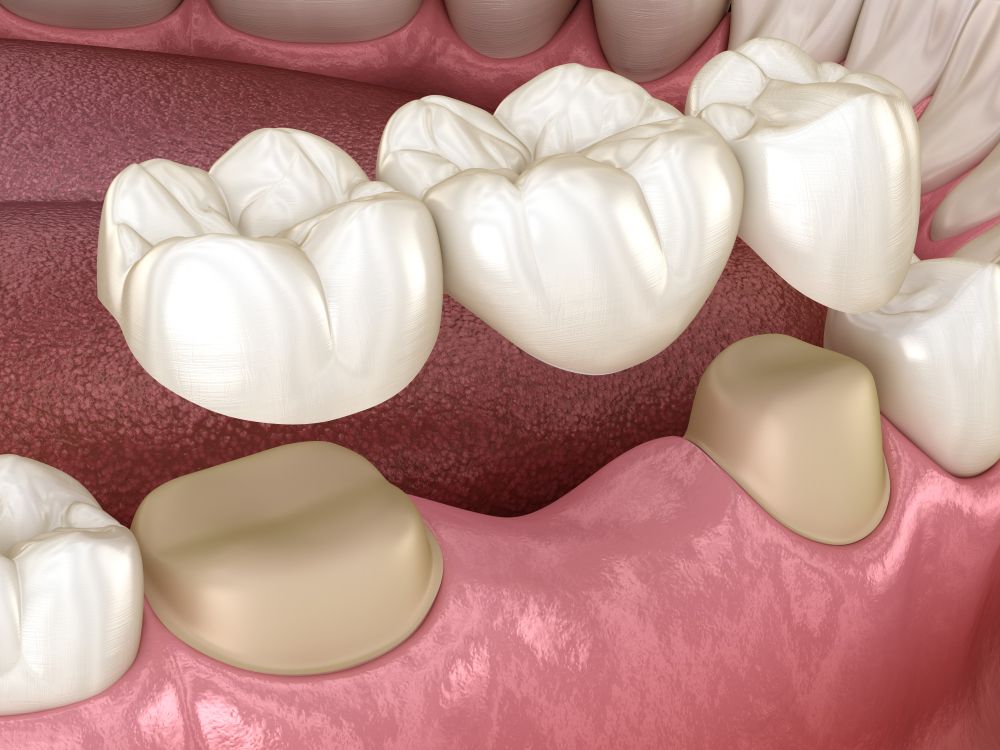
For patients who are suitable candidates, we begin the bridge process with a thorough examination of the teeth that will serve as anchors, known as abutment teeth. These teeth need to be healthy and strong enough to support the bridge over time. Some reshaping of the abutment teeth is required to allow the bridge to sit correctly, after which an impression or digital scan is taken so the bridge can be fabricated to fit precisely. A temporary bridge is usually placed while the permanent restoration is being prepared.
We also discuss long-term care with our patients following placement, as maintaining the health of the abutment teeth and surrounding gum tissue is essential to the longevity of the restoration.
- Abutment teeth assessed for strength and suitability
- Bridge fabricated to fit and match surrounding teeth
- Ongoing care guidance provided after placement
A dental bridge is one of several options we may discuss with patients looking to address a missing tooth. Speak with our team to find out whether this treatment is the right pathway for your situation.